Showing posts with label kodiak. Show all posts

14 April 2015

14 April 2015: Alaska Aerospace Corporation Changes Name of Kodiak Launch Complex to "Pacific Spaceport Complex"


Photo of U.S. Army rocket exploding just a few seconds after lift-off at the "Pacific Spaceport Complex"
Even though the KLC, located on Narrow Cape, Kodiak, Alaska, is actually not anywhere near the Pacific Ocean, AAC is changing the name of the rarely used facility to "Pacific Spaceport Complex".  This change is simply a PR ploy to disguise the fact that the last rocket launched from the KLC exploded a few seconds after lift-off. 

12 April 2015: Pacific Spaceport Complex Puts Plastic Fence Back Up Rather Than Remove It From Beach

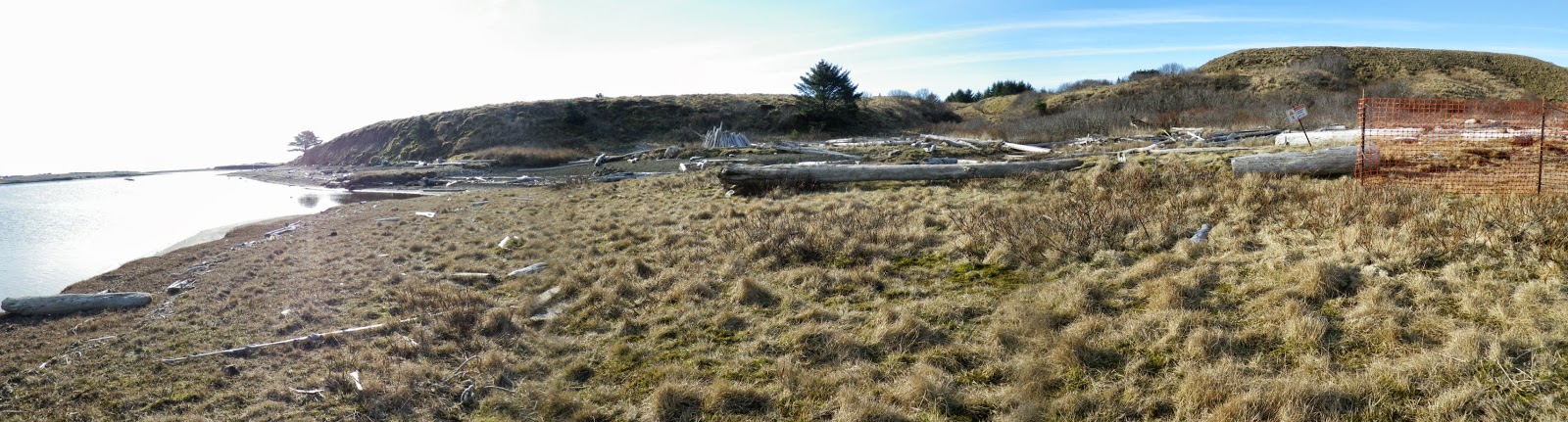
Good (?) news: AK Aerospace re-erected the plastic fencing on the beach near the Kodiak Launch Complex - it seems pointless since AAC stated that all the hazardous material has been cleaned up and you can just walk around the end of the fence anyway. All that needless orange plastic fencing along the highway is unsightly and restricting public access.Here are photos and video KRLIG shot on Sunday.
https://youtu.be/Z4KNMC9hi1M


29 September 2014

29 September 2014: FAA Draft EA for Launch Pad 3 Call for Comments, Public Meeting

Dear Recipient –

In compliance with FAA policy and procedures (Order 1050.1E, Change 1) for implementing the National Environmental Policy Act, as amended (42 U.S.C. 4321 et seq.), the FAA has initiated a public review and comment period for the Draft Environmental Assessment (EA) for the Kodiak Launch Complex Launch Pad 3 (Draft EA).  The Draft EA also is available on the FAA Office of Commercial Space Transportation website at: http://www.faa.gov/about/office_org/headquarters_offices/ast/environmental/nepa_docs/review/documents_progress/kodiak_launch/[[
[Note – the full Draft EA will be posted on the website by 9/16]

The FAA encourages all interested parties to provide comments concerning the scope and content of the Draft EA by October 15, 2014.  Comments should be as specific as possible and address the analysis of potential environmental impacts and the adequacy of the Proposed Action or merits of alternatives, and the mitigation being considered.  Reviewers should organize their comments to be meaningful and inform the FAA of their interests and concerns quoting or providing specific references to the text of the Draft EA. Matters that could have been raised with specificity during the Draft EA public comment period might not be considered if they are raised for the first time later in the decision process.  This commenting procedure is intended to ensure that the FAA receives substantive comments and concerns in time to address them in a Final EA.

The FAA will hold an open house public meeting on October 7, 2014, from 5:00 p.m. to 8:00 p.m.in the Katurwik Room of the Kodiak Inn Best Western, located at 236 E Rezanof Drive, Kodiak. The public will be able to speak to project representatives one-on-one and submit written comments or provide oral comments to a stenographer.

Please submit comments in writing to Stacey M. Zee, Federal Aviation Administration, c/o ICF International, 9300 Lee Highway, Fairfax, VA 22031.  Comments may also be submitted via e-mail to FAAKodiakEA@icfi.com

For any media inquiries, please contact Hank Price at 202-267-3447.

Stacey M. Zee
Office of Commercial Space Transportation
Federal Aviation Administration
800 Independence Ave, SW
Washington, DC 20591

25 August 2014

25 Aug 2014: Rocket Explodes at Kodiak Launch Complex - Launch Fails

Jay Barrett/KMXT
The Narrow Cape area beyond the Kodiak Launch Complex will remain closed to the public until further notice after this morning’s rocket explosion, according to an announcement from the Alaska Aerospace Corporation.
Pentagon spokeswoman Maureen Schumann said the U.S. Army rocket self-destructed just four seconds into its flight, at about 12:25 this (Monday) morning.
“Shortly after 4 a.m. EDT, the U.S. Army Space and Missile Defense Command/Army Forces Strategic Command, as part of the Defense Department’s Conventional Prompt Global Strike technology development program, conducted a flight test of the Advanced Hypersonic Weapon from the Kodiak Launch Complex in Alaska,” she said. “Due to an anomaly, the test was terminated near the launch pad shortly after lift-off to ensure public safety. There were no injuries to any personnel. Program officials are conducting an extensive investigation to determine the cause of the flight anomaly.”
It was the first launch at the KLC in three years.  No future launches have been announced at this time.
Alaska Aerospace CEO Craig Campbell said he couldn’t verify where debris from the rocket came down, but Schumann said it was her understanding that the debris is limited to KLC property and did not fall into the water. The three-stage solid-fuel rocket is based on refurbished Polaris intercontinental ballistic missiles.
Campbell said it did not appear, from a preliminary estimate, that there was any extensive damage to the Kodiak Launch Complex, but said AAC and Department of Defense personnel will be doing damage assessments all day.
Kodiak resident Stacy Studebaker, who owns a home in nearby Pasagshak, has long been a critic of the Kodiak Launch Complex. She said in an e-mail to KMXT that she wanted to know what kind of hazards any un-burnt rocket fuel posed and who will be conducting the clean up. Two popular recreation areas are adjacent to the KLC, Fossil Beach, which remains off-limits, and Surfer Beach.
In the nosecone of the rocket was the Army’s Advanced Hypersonic Weapon, which is a rocket-launched glider capable of flying at over 3,500 mph, or Mach 5. According to the Army’s description, the small craft is designed to be lofted nearly into space before separation and then glide through the atmosphere to its target at hypersonic speeds. If developed, it is expected to be able to hit any target on earth within an hour or less with conventional, non-nuclear explosives.
This was to be the second test of the glider. Its target was the Kwajalein Atoll in the South Pacific. The first was successfully launched from Hawaii.
Scott Wight, a Kodiak photographer, was watching the launch from Cape Greville in Chiniak, about a dozen miles from the launch site. He said even at that distance the explosion was very loud. Another photographer at Cape Greville said the launch looked out of control and that she wasn’t surprised to find out it self-destructed. She said the resulting fire burned brightly for a short while.
The Kodiak Launch Complex is about 25-miles from the city of Kodiak.

26 February 2014

Alaska Legislature Funding Kodiak Launch Complex is a Waste of Money

Dear Legislator:
      This message is written on behalf of the Kodiak Rocket Launch Information Group to explain why it is time to stop pouring money into the black hole that is the Kodiak Launch Complex.  KRLIG was formed in 1995 as an ad hoc group of Kodiak residents who were frustrated with Alaska Aerospace's lack of information and refusal to answer questions about the, at that time, proposed KLC.   As we corresponded with scientists, business people, and others around the country connected to the aerospace industry, our extensive research made it apparent that a rocket launching facility in Kodiak would NEVER pay for itself - a fact that has proven to be true.  It was at this point (1996 or 97) that more and more Kodiak residents opposed what came to be known locally as  "Space Pork Kodiak". A few years ago, an AAC official admitted to the Kodiak Island Borough Assembly that launch revenues had never covered the costs of keeping the facility open. 
     Some legislators have used the term "federally funded asset" in relation to the KLC; this phrase is somewhat misleading.  A more accurate term would be, "Ted Stevens funded asset".  When AAC went to AIDEA for a construction loan in the '90s, they were told not to come back until they could prove they would have the business to pay it back.  This never happened because they could not show they would have sufficient launches to pay back a loan and, more importantly, Senator Ted Stevens (at that time on the Senate Appropriations Committee) pushed through unwanted funding to USAF/DoD for initial construction - 40 million dollars, as I recall.  
      Here is a link to a story that explains what happened:  http://kodiaklaunchcomplex.blogspot.com/2008/12/klc-wasnt-wanted-by-military.html      This story appeared in  the Kodiak Daily Mirror in 2008. 
      Here is an article from the NY Times from about the same time documenting the USAF opposition to funding the KLC:  http://kodiaklaunchcomplex.blogspot.com/2008/10/incontrovertible-proof-that-klc-is.html
     Since 1998, AAC has been entirely dependent on state and federal funds just to keep the KLC open.  I am sure that you will hear from them this year that "several companies are interested in launches and contracts are imminent".  They have repeated that mantra for at least fifteen years with few results.  They will tout their "partnerships" as proof they are major players in the launch industry.  Well, without actual launch contracts they are not what they pretend to be.
       As long as Ted Stevens was in the Senate, the federal funds flowed; once he was out, it wasn't long until the Missile Defense Agency canceled the contract that essentially paid the costs of the KLC just to keep it open in case they wanted to launch a target missile.
    You may also hear claims along the "build it and they will come" line......another ploy AAC has used for years to continue to build more infrastructure requiring more money for maintenance, yet not really acquiring launch contracts. Keep in mind that every launch from the KLC has been paid for by federal government agencies - most have been military-funded launches.  Not one private entity has ever paid to launch a rocket in Kodiak.
    The last launch was September 26, 2011, and as of February 9, 2014,  there are no launches listed for 2014 on their website.  We don't know many businesses that can or should survive when, in almost three years,  they don't perform the service for which they were created.  Funding of the KLC is simply corporate welfare.
    The KLC was built on false premises, a non-existent (or fantasy) business plan, and now just sucks state funding for high salaries for its corporate officers (who do not reside in Kodiak) and maintenance for an ocean side facility that is quickly rusting away.  AAC will claim that they are bringing income and jobs to Kodiak.  This simply not true except when there is construction going on which provides short-term benefits although often the workers are from off-island or even out of state.
     Finally, it is my understanding that AAC has been paying a monthly stipend of $15,000 to the owner of the Narrow Cape Lodge which is used for lodging launch-related personnel;  it has been empty for the nearly three years since the last launch at the KLC.  We have learned that a legislator is trying to get state funds for AAC to purchase the "Space Hotel", which would mean even higher costs for them to maintain the KLC.  This purchase would be a waste of our dwindling state funds.
    Alaska Legislators, thank you for your attention to this issue.  It really is time to stop wasting money on this state boondoggle and close it down.   We have better and more productive uses for state money than the "Launch Pad to Nowhere". 
 We urge you to take action to stop this unrecoverable loss from our dwindling state coffers.  We look forward to your reply and thank you for your service to our state.

23 June 2011

Funding shuffle hides money going to Launch Complex (by Carolyn Heitman)

(Note that it's been over 9 months since a launch has occurred at the KLC and only one launch is scheduled for 2011 (27 Sept) as of 24 August 2011)
The Alaska State Legislators recently cut $4 million dollars to the Alaska Aerospace Corporation (AAC) to cover operating costs for the rest of 2011. However, the governor’s fiscal year 2012 budget still includes $4 million out of the $8 million AAC is requesting for operating and sustainment funding. Currently AAC has $29 million in its account for the remainder of 2011 and should use its own funds rather than ask for more handouts from the state. Perhaps if it did not pay its top employees such high wages it would have more operating funds. Annual salaries are over $2 million.

In order to finance AAC and the Kodiak Launch Complex through the rest of 2011 Sen. Lisa Murkowski, Sen. Mark Begich and Rep. Don Young have requested $9.5 million from Congress.

Since AAC is set up as a private corporation with corporate bylaws, it is time the state and federal government (using taxpayers’ money) stop funding it and the Kodiak Launch Complex. Without federal funding neither would be operating. Since 1993 the AAC has received a minimum of $305.7 million dollars in revenue — $144.8 million in federal grants, $134.3 million launch revenues and $26.6 million from the state of Alaska (mostly flow-through federal monies) — and to date AAC has not paid any dividends to the state, which was the original agreement. It would be interesting to know how many other private corporations are financially supported by the federal government, thereby adding to the national debt.

Last year when the Missile Defense Agency (MDA) stopped funding the Kodiak Launch Complex, it left a nice parting gift to the state by giving $80 million to the Air Force. In turn the Air Force funneled the same amount to the University of Alaska Fairbanks, a portion of which will be appropriated to AAC.

Starting in July AAC will operate under the Alaska Department of Military and Veteran Affairs, while at the same time intending to establish an Alaska Aerospace and Missile Defense Technology Center through the University of Alaska, which would make it more difficult to track Department of Defense/federal funding to AAC, Kodiak Launch Complex and Fort Greeley. It doesn’t hurt having retired military employees working for AAC, UAF (president) and ex-employees of the AAC working for the University of Alaska to rubber-stamp and push through Department of Defense funding for missile defense programs without the public’s knowledge. Talk about a stacked deck!

AAC also intends to use the National Guard Cooperative Agreement for further Kodiak Launch Complex infrastructure development (Alaska Aerospace Corporation Financial Statements, June 30, 2010) and much needed federal funding could be directed away from the needs of the National Guard. In past years federal funding for the Kodiak Launch Complex was earmarked and funneled via of the Army National Guard at Elmendorf Air Force Base — again to make funding more difficult for the public to track.

AAC is a private corporation which will operate through both the state of Alaska and the Department of Military and Veteran Affairs, doing Department of Defense activities on state public land (Narrow Cape). Where else has the Department of Defense launched missile targets and defense satellites from public-use lands? Something is wrong with this picture.

In October 2010 the Alaska Aerospace Corporation received $227,195 from the Federal Aviation Administration (the agency who licensed the KLC and is also a cooperating agency with the AAC) for the First Commercial Space Transportation Infrastructure Matching Grant for a Rocket Motor Storage Facility for the Kodiak Launch Complex (now the FAA is helping fund construction projects at the KLC). The AAC is always claiming to be broke and asking for hand-outs so where did it get the matching funds? The storage facility is not one building but will consist of 5 ‘Earth Covered Magazines’ (dirt covered structures). The first structure was completed last year and the second is scheduled to be completed this year. The Kodiak Launch Complex was never intended or developed to be a commercial launch site but a government/military facility. The AAC’s goals also include the creation of a Kodiak Economic Development Zone. Who will most benefit from that action remains to be seen.

This summer the AAC is planning preparation work for the installation of a ‘Liquid Oxygen Air Plant’ at the Kodiak Launch Complex (KLC) for larger ‘medium-lift’ launch vehicles that require liquid fuel. The vehicles would take off from Launch Pad 3 which will be located on the Cliffside above Fossil Beach. The AAC has consistently told the Kodiak public from the beginning that NO liquid- fueled vehicles would be launched from the KLC, only solid fuel vehicles. The liquid fuel plant could potentially leave the door open for launching interceptors from the KLC in the future, depending on new U.S.-Russia treaty agreements.

The previous U.S.-Russia ‘Start Treaty’ prevented the launch of interceptors from the KLC. However, the 2011 AAC ‘Proprietary and Competition Sensitive’ report mentions just that. An excerpt from the report states: “With the maturing of the missile defense industry, there will be a need to provide sustainment testing of the system to insure that the mission readiness of the interceptors does not degrade. Test launches of interceptors from the KLC can accomplish such testing without taking the missile defense system off-line. This sustaining aspect of missile defense is possible at KLC and AAC may have an opportunity to regain missile defense operations at KLC.” Are missile silos in Narrow Cape’s future?

When I contacted the Alaska Department of Natural Resources (AAC’s landlord) to find out if the Alaska Aerospace Corporation had provided an updated detailed plan of operations or a permit application for the liquid fuel plant, I was told that the DNR transferred land management rights and authority to the AAC and that the DNR is a ‘cooperating’ agency. Being a cooperating agency the DNR should be well informed of what is transpiring out at Narrow Cape, however, the department had no knowledge of the liquid fuel plant or was not willing to release the information. There has been no updated DNR/AAC Land Management Agreement or Development Plan since 2009, nor when contacted, did the Federal Aviation Administration admit to receiving a permit application from the AAC for the installation of the liquid fuel plant. Apparently the AAC is blatantly going ahead with whatever development it chooses at Narrow Cape without applying for permits or notifying the DNR or the Kodiak public of any proposed plans. No thanks to Senator Stevens the AAC was never required to do a Narrow Cape/KLC ‘site-specific’ environmental assessment.

Kodiak has a local representative (retired military) sitting on the Alaska Aerospace Board of Directors along with Rep. Austerman (a non-voting member) but residents as a whole very seldom get any updated reports or feedback in the local paper on what the AAC is proposing for Narrow Cape. When it comes to Alaska state public lands any development is suppose to be for the maximum benefit of the people and Kodiak does not need another Vandenberg or Cape Canaveral. From the AAC’s actions all these years it appears to have been originally set up as a military entity under disguise of a state agency, hiring mostly military retirees and their NASA friends and taxpayers should not be stuck with financially supporting it and the KLC and it is time to take away the Golden Fleece.

Carolyn Heitman is a 44-year Kodiak resident.

10 April 2010

We Told You So: Kodiak Launch Complex Bailed Out Again

Since 1995, KRLIG's research has shown that the Kodiak Launch Complex would never be a successful business; for 15 years we've said that the KLC and AAC could not survive on their own without continual and substantial handouts from the federal and state governments. This aging facility has yet to cover its operating costs with launch revenues.  It has been a constant drain on state and federal resources.  Here is the latest example of Alaska pouring money down the toilet:
The Alaska Legislature has budgeted " $4 million to the Alaska Aerospace Corporation to temporarily cover operating expenses." (Kodiak Daily Mirror 4/0/10) 
Note the number of days since the last launch in the counter to the right.
The KLC just sits out at Narrow Cape on an earthquake fault slowly rusting away in the harsh marine environment.
Meanwhile, property owners in Kodiak have to help pay for a badly needed new high school - that four million would be far better spent on education infrastructure (or operating costs for that matter)

09 May 2009

Kodiak Launch Complex Already Outdated & Obsolete?


Top General: Missile Defense Is Dead, Long Live Missile Defense (Updated)

Ftt09a

Ballistic missile defense as we know it is all but dead, one of the country’s top military just declared. But already, there are new anti-missile priorities taking shape.

General James Cartwright, the vice chairman of the Joint Chiefs of Staff, relayed the message yesterday to the defense industry. "Ballistic missiles are about as passé as e-mail," he said to an audience of missile-defense contractors. "Nobody does it anymore. It’s just gone… no stupid person, enemy out there would be so silly as to come at us with a minimum-energy trajectory. Give me a break. Even the people we would call ‘Third World’ have gone beyond that."

The administration of President George W. Bush poured around $10 billion a year into ballistic missile defense; it focused particular effort on fielding a limited missile defense capability that would protect the United States from a lone missile lobbed by a rogue state (i.e., North Korea). It also expended serious political capital trying to seal a politically controversial deal to station missile defense interceptors in Eastern Europe.

In theory, the European site was supposed to protect the United States and Europe from long-range ballistic missiles launched from the Middle East (although Iran has yet to acquire a missile that could reach the United States). Cartwright said missile defense funds would shift toward deterring more realistic threats. "The architecture associated with those terminal defense type capabilities, those area defense type capabilities that have the mobility and have the capability to be out there to address those threats are where we are going to start to put money," he said. "Because it is the most likely."

That’s good news for the developers of the Terminal High Altitude Area Defense, or Thaad, a "hit-to-kill" air defense system that can knock down short- and medium-range missiles at greater ranges and higher altitudes than the Patriot system. But it’s not so great for defense contractors who are designing far-out systems to destroy enemy missiles in the vulnerable "boost" phase. As Noah noted earlier today, one major boost-phase program is already in the crosshairs: the laser-equipped Boeing 747 that is supposed to zap missiles out of the sky as they rise from the launch pad.

Observers are also wondering what this shift means for Boeing’s Ground Based Midcourse Defense, or GMD. The Bush administration activated GMD at two sites, one in Alaska and one in California; according to Reuters, Cartwright said the future of the system would depend on whether it could counter other threats. "The more utility, the more willing you’re going to be to put money in it," he said.

Interestingly, Gen. Bantz Craddock, the head of U.S. European Command, said in written testimony submitted today that the U.S. Navy was studying the feasibility of stationing a missile-defense-capable Aegis ship to defend the Eastern Mediterranean region. In his testimony, Craddock said the Navy was leading an "urgent effort" to develop a command-and-control architecture for an Aegis Ballistic Missile Defense ship operating in defense of countries in the Eastern Mediterranean.

At first glance, that sounds like a more realistic way to counter the Iran missile threat than deploying the long-range GMD system in Europe. The U.S. military has previously looked at the possibility of creating an "instant" ballistic-missile defense system by tying the land-based X-band radar developed for Thaad with sea-based radars and interceptors; Rick Lehner of the Missile Defense Agency told Danger Room a transportable X-band radar has been used in previous tests to provide cueing information to an Aegis ship which then used the data to perform a simulated launch and intercept.

UPDATE: The Obama administration is also picking up on a top complaint of the missile defense critics: namely, that missile defense testing isn’t real enough. Elaine Grossman of Global Security Newswire quotes Peter Verga, the acting deputy defense policy chief, as saying: "I think anything the test community can do to reassure people that the tests are, in fact, operationally realistic is very important."

PHOTO: U.S. Army

04 May 2009

AADC 2008 Lobbying Expenses


From Opensecrets.org

Alaska Aerospace Development Corp

A special interest’s lobbying activity may go up or down over time, depending on how much attention the federal government is giving their issues. Particularly active clients often retain multiple lobbying firms, each with a team of lobbyists, to press their case for them.

Year:

Total Lobbying Expenditures: $50,000
Subtotal for Parent Alaska Aerospace Development Corp: $50,000

IndustryTotal
Defense Aerospace$50,000


Lobbying Expenses Reported by Subsidiary Alaska Aerospace Development Corp
Firms HiredTotal Reported by FilerReported Contract Expenses (included in Total Reported by Filer)
Birch, Horton et al
$10,000
Cohen Group
$40,000

*Each quarterly filing is treated as a separate report, and each may mention multiple clients.

Feel free to distribute or cite this material, but please credit the Center for Responsive Politics. For permission to reprint for commercial uses, such as textbooks, contact the Center.

24 April 2009

Science(?) Fiction from Sarah Palin: Launch Pad to Nowhere


Sarah Palin repeats the "build it and they will come" false rhetoric we've heard from AADC since 1995. "Significant Growth?" - only if the 17.5 million in state and federal funds AADC has received this year continues for years to come. And the growth will not be number of launches or more business; just a larger white elephant marring the Narrow Cape landscape. Expand the infrastructure for less than one launch per year on average for the life of the facility.
KLC is NOT the "best equipped [launch facility] anywhere": it does not have the capacity to store more than one rocket at any one time. And, try getting your personnel to Kodiak when Mt. Redoubt erupts ash and all the flights are grounded; or the fog rolls in and flights from Anchorage can't get in for days at a time.
The only launch customer for the KLC has been the U.S. government with all but one launch being overtly military. Keep in mind that while Governor Palin doesn't want to accept federal stimulus money for education, she has requested increased pork barrel funding for the KLC. Our fiscal conservative wants to spend more of your tax dollars on a facility that cannot even support itself with launch revenues. It's a kind of "launch pad to nowhere" scenario.

Sarah Palin Report

A Conservative Outlook
Friday, April 24, 2009
Kodiak Launch Complex

Governor Sarah Palin visited the Kodiak Launch Complex Thursday April 23, 2009 located at Narrow Cape, AK on Kodiak Island. KLC is poised for significant growth as the vital role of the space-based systems becomes increasingly important to our nation. The launch facility is the newest and best equipped anywhere. AADC will provide support for future MDA target missions as well as two missions with the United States Air Force in 2009.

17 February 2009

Old KRLIG web site

Click on the title to view the old KRLIG website, last updated three years ago. Some relevant links at the bottom of the page are still active. Interestingly, we were saying back then that the only reason the KLC was ever built was due to former Senator (now convicted felon) Ted Stevens' backdoor pressure on the Pentagon; these charges have since been validated by the NY Times.

16 January 2009

AADC Fails in Public Relations - No One Knows About the KLC!

Apparently, no one knows about the Kodiak Launch Complex which is, supposedly, a "commercial spaceport". Note that the New Mexico facility has already had several commercial launches since 2007. How many commercial launches has the KLC had since its inception: zip, zero, nada, 0.

US gives green light for first commercial spaceport

WASHINGTON (AFP) – The US Federal Aviation Administration has given the green light for the world's first commercial spaceport, New Mexico authorities said Thursday.

The FAA granted Spaceport America a license for vertical and horizontal space launches following an environmental impact study, according to the New Mexico Space Authority (NMSA).

"These two governmental approvals are the next steps along the road to a fully operational commercial spaceport," said NMSA Executive Director Steven Landeene.

"We are on track to begin construction in the first quarter of 2009, and have our facility completed as quickly as possible."

The terminal and hangar facility for horizontal launches is planned for completion by late 2010.

NMSA hopes to sign a lease agreement later this month with Virgin Galactic, a branch of Virgin Atlantic owned by British airline magnate Richard Branson. The firm's SpaceShipTwo passenger craft will be the main attraction at the site.

The system plans to take passengers approximately 100 kilometers (62 miles) into the sky. Virgin Galactic plans to welcome 500 passengers per year who will pay 200,000 dollars each for a suborbital flight lasting three to four minutes.

There have been several commercial launches from the site since April 2007, with more launches planned.

Spaceport America has also been working closely with aerospace firms Lockheed Martin, Rocket Racing Inc./Armadillo Aerospace, UP Aerospace, Microgravity Enterprises and Payload Specialties.

The Russian federal space agency currently offers the only orbital space tourism flights aboard the Soyuz spacecraft, which allows passengers to visit the International Space Station (ISS) for several days. The price for the trip recently increased from 20 million dollars to 35 million dollars.

19 December 2008

AADC Asks for Another Huge Slice of PORK


As you read through the request, you'll get to the part where AADC tries to hold the Alaska State Legislature hostage by claiming, "If this capital request is not approved, the KLC will not be able to support the U.S. Air Force in its Operationally Responsive Space program. Nor will AADC be able to attract other potential customers..."

Since 1995, AADC has had a continuous pattern of saying at every step and every request for more handouts that if they just get this one, then everybody will want to launch rockets in Kodiak. Realistically, it's just too darn expensive to launch in Kodiak, (unless, of course, you are spending Department of Defense dollars.)
With the extreme drop in the cost of oil per barrel, the State of Alaska cannot afford to give handouts to AADC. It's time for them to pay their own way.

Click on the title of this post to see the entire document in PDF, including some financial charts not in this post.
k
Kodiak Launch Complex Infrastructure FY2010 Request: $17,500,000
Reference No: 41789

AP/AL: Appropriation Project Type: Construction
Category: Development
Location: Kodiak Contact: Dale K. Nash, Chief Executive Officer
House District: Kodiak (HD 36) Contact Phone: (907)561-3338
Estimated Project Dates: 07/01/2009 - 06/30/2014
Brief Summary and Statement of Need:
Alaska Aerospace Development Corporation (AADC) requests $17.5 million to build two facilities: a dedicated rocket motor storage facility and an additional launch pad. This program contributes to the Department's mission of promoting a healthy economy and strong communities by providing economic growth in the communities it serves.
Additional Information / Prior Funding History:
Refer to the funding matrix in the detailed description.
Project Description/Justification:
This is the second of a two-year funding request for this multi-year project.
Alaska Aerospace Development Corporation’s (AADC) Kodiak Launch Complex (KLC) requests funding for the following: a dedicated rocket motor storage facility, an additional launch pad, and related infrastructure. KLC’s existing two launch pads are right next to each and cannot be used simultaneously, thereby limiting customers and launches. The additional facilities will allow multiple launch customers to be on site simultaneously, double KLC’s launch capabilities, and result in KLC being a full service spaceport.
AADC is currently developing a long-term relationship with the U.S. Air Force (USAF). The USAF plans to initiate the Operationally Responsive Space (ORS) program with the goal of having launch on-demand capability – placing national defense assets in orbit with very little lead time. KLC is an attractive launch site for the ORS program because the KLC offers flexible launch scheduling not available at other U.S. launch sites; and launches from KLC avoid populated areas, environmentally
sensitive areas, and congested air routes. However, the ORS program will require a dedicated rocketmotor storage facility and dedicated launch pad. Neither is currently available at the KLC.
An initial ORS demonstration launch is planned for September 2009 and a second potential launch is scheduled for December 2009. Once mature, it is estimated the ORS program will launch four or more payloads to orbit each year. This is in addition to launches already provided for the Department of Defense, Missile Defense Agency. In addition, the AADC is currently in discussions with other potential customers such as other Department of Defense agencies, National Aeronautics and Space Administration, and commercial interests.
The facilities will be built over the next two years and will cost $35 million. In fiscal year 2009 and again in 2010 AADC has/will be requesting $17.5 million. Of that amount, $14.0 million will be provided by the federal government and $3.5 million is requested from the State’s General Fund. The State’s initial General Fund investment of $15.6 million has resulted in $214 million in revenue, a viable aerospace industry within Alaska, and employment opportunities in Kodiak. KLC has become an acknowledged national asset in the U.S. spaceport inventory. Additional investment by the State
will send a strong message that Alaska supports the KLC and the continued expansion of the aerospace industry in Alaska.
If this capital request is not approved, the KLC will not be able to support the U.S. Air Force in its Operationally Responsive Space program. Nor will AADC be able to attract other potential customers as the KLC will continue to be limited – unable to accommodate multiple launch customers on site simultaneously.
Funding History
Year Amount Legislation AR #
FY 1999 5,000,000 SLA 98 Ch 139 Page 40 Line 9 32591-04
FY 2000 6,000,000 SLA 99 Ch 2 Page 38 Line 21 32646-04
FY 2000 9,300,000 RPL 0810064 32647-04
FY 2001 17,900,000 SLA 00 Ch 135 Page 3 Line 13 32627-05
FY 2002 4,500,000 SLA 01 Ch 61 Page 3 Line 23 32639-06
FY 2002 20,000,00 SSSLA 02 Ch 1 Page 112 Line 4 32673-06
FY 2004 38,000,000 SLA 03 Ch 82 Page 45 Line15 32679-08
FY 2006 36,000,000 FSSLA05 Ch3 Page3 Line27 32723-09
FY 2007 15,000,000 SLA 06 Ch82 Page 3 Line 30 10334-11
FY 2008 15,000,000 SLA 07 Ch30 Page 84 Line 31 6355-12
FY 2009 17,500,000 SLA 08 Ch29 Page 88 Line 9 4689-13

State of Alaska Capital Project Summary Department of Commerce, Community, and Economic Development
FY2010 Governor Reference No: 41789
12/14/08 4:18:04 PM Page 2 Released December 15th

State of Alaska Capital Project Summary Department of Commerce, Community, and Economic Development
FY2010 Governor Reference No: 41789
12/14/08 4:18:04 PM Page 1 Released December 15th
Kodiak Launch Complex Infrastructure FY2010 Request: $17,500,000

Reference No: 41789

13 December 2008

Kodiak Rejects Missile Defense - Overwhelmingly


Results from the Kodiak Daily Mirror online poll, December 5 through December 12:

The U.S. missile shield...

is unnecessary - 67.17%

is important for the nation's defense - 21.59%

will never work - (5.1%)

will ramp up a new arms race - (6.15%)

[percentages based on 667 responses]

Over 78% of the respondents voted anti missile defense. While online polls are generally considered "unscientific", it seems clear a community that is home to a facility used in missile defense tests rejects the notion that it is actually needed.

Coupled with another poll from 26 February 2005, it appears that the KLC is not only unneeded, but also unwanted. We have copied the post from that date below:

Poll Proves Local Opposition to Kodiak Launch Complex

Results of the Kodiak Daily Mirror online poll (17-24 February 2005) 839 responses
Published 24 Feb 2006 in the Kodiak Daily Mirror, page 4
"Why Should the Kodiak Launch Complex exist, or not exist?"

41% - It's waste of taxpayer money and useless in national defense
15.85% - It could potentially damage the environment.

56.85% - Anti-Kodiak Launch Complex

27.41% - It's crucial for national defense
15.71% - It's good for the local economy

43.12% - pro-KLC

The poll clearly indicates local attitudes toward Space Pork Kodiak. We suspect the numbers opposing the KLC would be even higher if there hadn't been the large number of out-of-state workers in town to support the latest MDA launch. The poll was running over 50% for "It's a waste..." until somebody alerted the KLC staff around Feb 22 causing a huge spike in the pro percentages. Despite this anomaly, the unmistakable community opposition is undeniable and prevailed in the overall results.

11 December 2008

More Alternative Views of the Missile "Test"

From Arms Control Wonk

MDA Test Oddities

I am close to posting on the most recent Missile Defense Agency flight test (FTG-05).

In case you wonder why this is taking me literally days to work through (with lots of help from David Wright), read these statements by new MDA Director General Patrick O’Reilly.

Good afternoon, or as Mr. Whitman said, almost good evening. What I would like to do is go over exactly what happened this afternoon. At 1504 Eastern time, a little after 3:00, we launched a target out of Kodiak, Alaska and it did end up, 29 minutes later, with an intercept off of California using a ground-based mid-course defense system, the Aegis system, some of our satellite systems and our early warning radar system in Sacramento and also using a forward-based radar that we had located in Juneau, Alaska for today’s test only.

[snip]

All right — and we showed the footage of today’s launch out of Vandenberg. As I said, the target was launched at 1504 and at 1523 Eastern Time, the target was in view and — of the Beale radar and the other sensors, and we launched a ground-based interceptor. That’s the first stage, and then it will show a separation. We’ll have other data that will come over the next 24 hours — the intercept occurred over 200 kilometers in altitude and 1,300 kilometers downrange from the launch point.

[snip]

Q: Why is it hard for the target to — why is it hard to deploy countermeasures, why did that fail?

GEN. O’REILLY: Well, I can’t get into the great detail, but I can say simply, countermeasures, you try to build them to be very lightweight so that they don’t affect the original flight, but at the same time, you’re traveling at about 10 kilometers a second, somewhere around there, around 15,000 miles an hour. So at that, at that and you’re leaving the earth’s atmosphere, and you’re typically doing a lot of maneuvers at that point and at the same time you have to try to deploy two or three or four, whatever it is, lightweight objects. And that has been problematic on this particular target. The target itself is 40 years old, and it was one of some of our older missiles. Again, this was the last test using this particular target configuration, and we have a new target that is being assembled at this time by Lockheed Martin, that’ll be tested in the spring with Aegis and then follow up with a GMD later on this summer in another test. And that will be a different countermeasure system, again, a newer one.

The numbers in these passages are complete goobledygook.

— The entire scenario took 29 minutes? It is hard to believe that the interceptor was launched nineteen minutes into flight (15:23 EST) and took a full ten minutes to travel just 1,315 kilometers.

1,315 km in ten minutes works out to about 2.2 km/s. (The hypotenuse of triangle with 200 km and 1,300 km legs.) The GMD interceptor is supposed to have a burnout of like 7-8 km/s.

What, did MDA strap the interceptor to a flock of geese? That’s got to be a mistake. It probably should have taken four or five minutes for flyout. I am honestly very, very confused here.

— The countermeasures failed because the missile was traveling 10 km/s?

First, this is a 3,000 km range missile with a burnout velocity of probably around 4.5 km/s. It wasn’t traveling anywhere near 10 clicks a second. (Not that speed would explain why the countermeasures didn’t work, but he’s clearly trying to make something up on the spot and just gets confused.)

Second, ICBMs don’t travel 10 km/s. The speed is more like 7 or 8 km/s. Of course, O’Reilly also gave the measure in miles per hour — 15,000 mph, which in metric that is about 7 km/s.

So, here you what appears to be a simple error (the timeline doesn’t jibe), an apples-to-oranges comparison (talking about ICBM speeds in a test against a much slower moving MRBM) and a basic inability to convert to metric.

Other than that, everything is clear as a bell.

Comment

I’d looked at similar puzzlements in an earlier test. I don’t have an explanation for the apparently slow fly-out time of the interceptor, but do have a thought about the target speeds and, possibly, some constraints on decoy deployment.

If you look at the locations of the second and third stage range safety areas (http://www.kodiakdailymirror.com/?pid=19&id=7035), you see that they’re much closer together than would be expected. I suspect that means the third stage was used as an accelerator to give the target RV an ICBM-like trajectory. I.e., the second stage delivers the third stage to a point at or after the apogee of a simulated ICBM trajectory, then the third stage pitches down to impart the proper velocity vector. After which the decoys would have to deploy. Something like was done at White Sands way back when: http://www.designation-systems.net/dusrm/app4/athena.html

Might be worth running some simulations using such a scenario.

— Allen Thomson · Dec 11, 02:02 PM ·

05 December 2008

How Do We Define Success?

Today a rocket launched from Kodiak was intercepted by a rocket launched from Vandenburg AFB in California. As the champagne celebratory haze clears, keep a few things in mind:

1. It wasn't a resounding "success": According to Lt. Gen. Patrick O'Reilly, head of the Missile Defense Agency, "...the target did not release planned countermeasures designed to try to confuse the interceptor missile. O'Reilly did not say what those countermeasures were, but they often include decoys or chaff to throw off shoot-down attempts." Apparently the technology to shoot down a real enemy missile which would have countermeasures is not yet working.

2.It wasn't a truly realistic test: The "test" was very tightly controlled - everybody knew when the interceptor would be launched and its probable path (they've launched targets from KLC before). One wonders what would happen if they actually had to scramble an interceptor with no prior warning. Now that would be a true test.

3. If the U.S. can't launch an ICBM that works the way it should, why do we think other countries can? Neither North Korea or Iran has ever successfully fired a missile that had any chance of landing anywhere near the U.S. Right now, if North Korea got really lucky, they might be able to hit the tip of the Aleutians. We are sure the folks out there appreciate the expenditure of ten billion dollars a year to help them sleep more soundly.

4. It's ALL about the money: Roughly $10 billion is spent per year on the program, which is run by defense contractor Boeing Co. but includes work by most of the nation's largest weapons makers. It is spread across three branches of the military and is composed of missiles, radar and satellites designed to intercept missiles during different stages of flight.

5. Fortunately, President-elect Barack Obama expressed skepticism about the capabilities of the system during his campaign, leading to speculation he may reduce the program's scope. Russia has strongly objected to plans to install missile interceptors in Eastern Europe.

6. At least the true character of the KLC has finally been admitted. According to the AP: "WASHINGTON - The Defense Department said today it shot down a missile launched from a military base in Alaska..."

7. Finally, Kodiak desperately needs a new high school and a new police station and jail. Our roads are a mess and infrastructure in Kodiak, Alaska and all across the United States is crumbling. Take a drive down Mission Road past the Salvation Army and ask yourself: Is Missile Defense worth it? Friday's test cost between $120 million to $150 million.

02 December 2008

We Saw the Rocket! Security is Tight!

Last Friday after a hike around Narrow Cape, we saw the rocket out on the launch pad. According to the security guard, they were doing a "dry run" in preparation for the upcoming launch. Interestingly, the nose was covered with a shroud. Although we didn't take pictures, I don't think anyone would have stopped us.
The rocket is one of those solid fuel dinky little surplus Minuteman or Polaris bottle rocket missiles we have left over from the Cold War. You could actually see the fuse coming out of the rocket that the technician lights with a Bic lighter. I think it was mounted on a Budweiser bottle, but the label was turned away from us, so I can't be sure.
You'd think they'd at least use local beer bottles.

06 November 2008

Rocket Motor Arrives in Kodiak Nov 7-8

Rocket motor arriving for possible December launch from Narrow Cape
Article published on Thursday, Nov 06th, 2008
DAILY MIRROR STAFF

A rocket motor and associated hardware will arrive at the Kodiak State Airport late Friday and be moved to the Kodiak Launch Complex at Narrow Cape early Saturday, according to a Missile Defense Agency news release.

The rocket motor and hardware will be used by the Missile Defense Agency in an upcoming test launch from KLC in December or January to target an interceptor launched from Vandenberg Air Force Base in California. An Air Force C-17 aircraft, carrying the rocket motor will arrive at the airport after the airport has closed for the night. It will then be delivered to KLC via the Chiniak/Pasagshak Highway in a convoy.

Rezanof Drive near the Coast Guard Base and the State Airport will close as the convoy transitions onto the highway. Safety precautions are being taken to assure the safety of the public and every effort will be made to limit possible inconvenience while the convoy moves the rocket to KLC, the release said.

In a separate news release, MDA announced the arrival of an AN/TPY-2 radar unit in Juneau to support the upcoming test. The radar arrived at the National Oceanic and Atmospheric Administration facility at Lena Point, Wednesday, after being flown from the Pacific Missile Range Facility in Hawaii. This is a temporary deployment and the radar will be removed from the site shortly after the test is completed.

According to MDA, the AN/TPY-2 is a high-resolution X-Band radar used to detect ballistic missiles early in their flight. It can track, identify, and estimate the trajectory of a threat missile, and then feed that information to the command and control system used to develop intercept solutions. The AN/TPY-2 is a transportable unit that can be deployed around the world. Juneau was selected because its location provides an operationally realistic sensor picture for the simulated threat missile from Kodiak.

03 November 2008

Radar Unit for Upcoming MDA Test Involving KLC

Juneau: Monday, November 3, 2008

Radar Unit Arrives for More Tests
A radar unit to support an upcoming Missile Defense Agency flight test arrived in Juneau Saturday. It was taken to the National Oceanic and Atmospheric Administration facility at Lena Point after being flown from the Pacific Missile Range facility in, Hawaii. The agency explains in a press release that as done in the previous flight test, this is a temporary deployment and the radar will be removed from the site shortly after the test is completed. The test is scheduled for the December-January time frame, with a target vehicle being launched from the Kodiak Launch Complex and an interceptor being launched from Vandenberg AFB. The radar will be used to track the target vehicle.

30 October 2008

Next KLC Launch

DEC-JAN To be announced GBI --- Scenario calls for the launch of a mock warhead from the Kodiak Launch Complex, Alaska followed by a Ground-Based Interceptor (GBI) from Vandenberg AFB. The DoD will announce the launch time several hours in advance. Operation Name: FTG-05

http://thechristianradical.blogspot.com/2008/10/nov-5-minute-man-iii-nuke-missile.html